We’re interested in understanding how microbial eukaryotes – a.k.a ‘protists’ – have evolved to thrive in low-oxygen environments.
Low-oxygen environments are important ecosystems that host diverse microbial communities. The interactions between these microbes can have major environmental impacts on global geochemical carbon, nitrogen, and sulfur cycles. Moreover, the interactions between these microbes in the anaerobic digestive tracts of animals can have major health and veterinary consequences.
Living without oxygen can be challenging. To survive in such environments, some organisms work together using metabolic syntrophy – a type of mutualistic symbiosis where there is a metabolic division of labour amongst individuals in a community. We know that metabolic syntrophy is common among anaerobic prokaryotes, but less is known about the role of syntrophy in the survival of microbial eukaryotes in these environments.
My research programme will discover and characterize protist:microbe interactions from diverse anaerobic environments including anoxic marine and freshwater sediments and the animal gut.
You can read more about some of our current projects below.
Julie: Hidden Worlds – Understanding Microbial Life in Low-Oxygen Environments
The microbial world and its inner workings, particularly in low-oxygen environments, is still largely a mystery. We set ourselves to transform our understanding of it, using cell sorting and long-read sequencing technology to better describe both eukaryotic and prokaryotic microbes and their interactions in such habitats. A key part of our work is isolating and maintaining microbial communities from low-oxygen environments in the lab, as well as improving environmental genomics for more accurate taxonomic identification and in-depth understanding of their roles and functions. As a whole, we aim to develop both cultures dependent and independent methods to study those microbes, with a special interest in eukaryotes.
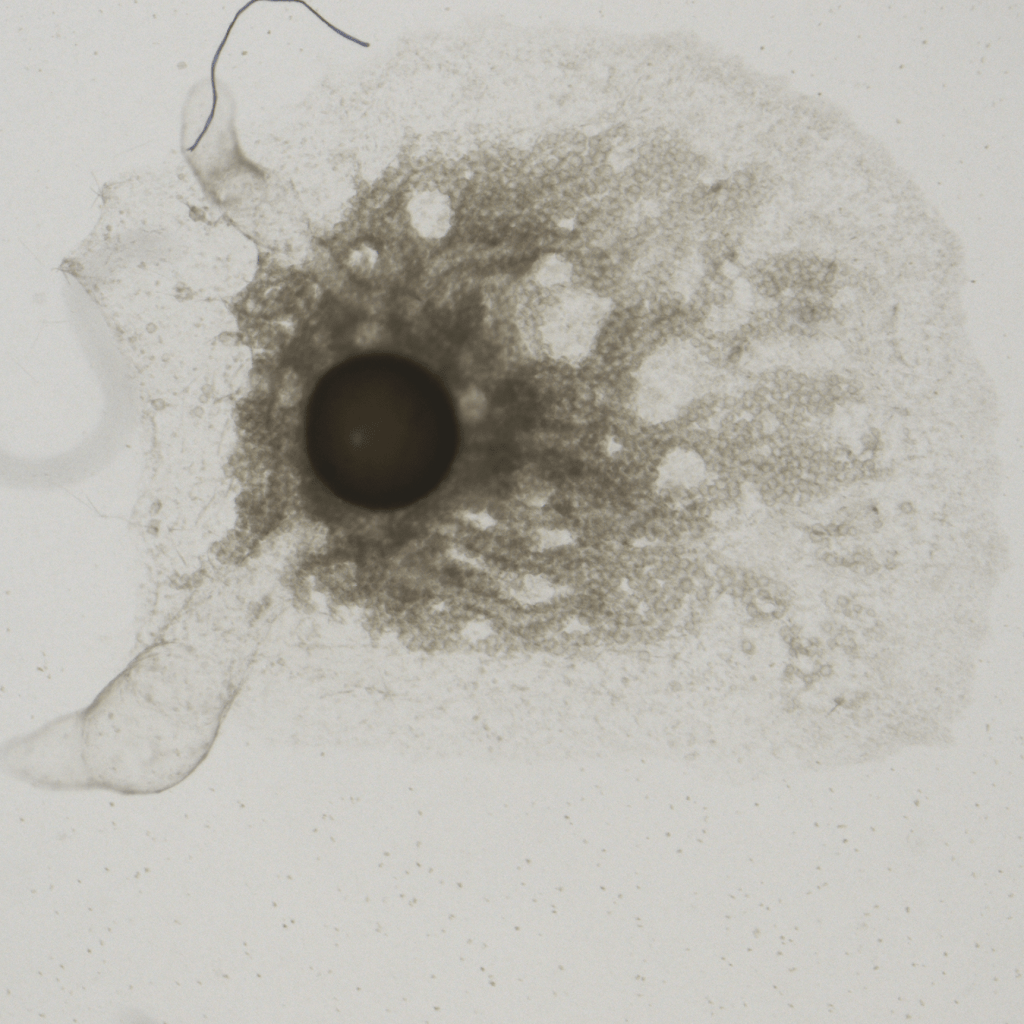
Sofia: Survival Riddles – Unveiling Low Oxygen Adaptation in Multicellular Organisms
Given the metabolic implications that the lack of oxygen may cause to the mitochondria of aerobes, it is quite remarkable how some animals survive under very low oxygen conditions. Sponges, as sessile organisms, are highly vulnerable to environmental change; however, they can endure very low oxygen levels for extended periods. Recent work in the Stairs Lab has unveiled a significant discovery – the presence of the rqua gene, responsible for anaerobic metabolism in a vast number of microbes (prokaryotes and eukaryotes), in the genomes of freshwater sponges. Remarkably, this gene is absent in their close relatives, the marine sponges, marking the first known occurrence of this gene in multicellular organisms.
 the lab upStairs